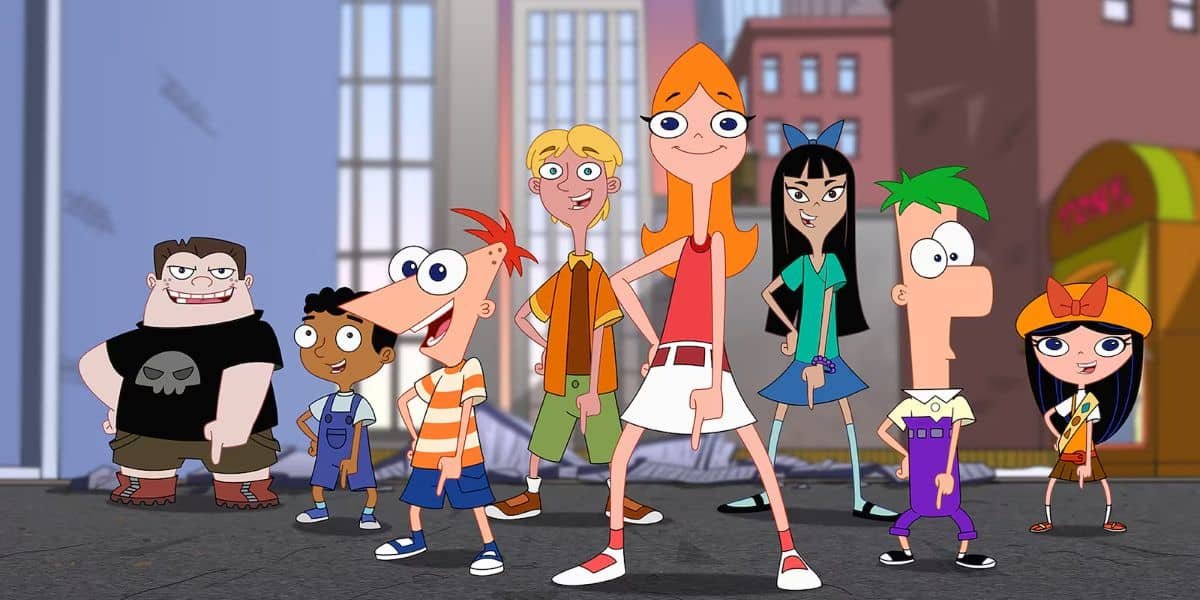
If you've ever found yourself pondering the timeline of Danville's most inventive stepbrothers, you're not alone. Phineas and Ferb is a show where every day is a new adventure, but also "the same day" in a perpetual summer, creating a wonderfully complex canon. For fans keen on Connecting Season 3 to the Larger Phineas and Ferb Universe (Canon & Timeline), this era presents some of the most fascinating developments, challenging the very fabric of the show's established reality while deepening character arcs and introducing universe-altering concepts.
Season 3, running from March 2011 to November 2012, wasn't just another chunk of episodes; it was a period of significant expansion, introducing pivotal storylines and even a feature-length movie that dramatically shifted our understanding of the Phineas and Ferb world.
At a Glance: Season 3's Impact on the P&F Universe
- Breaks the "One Summer" Rule: Features multiple holiday episodes (Halloween, Christmas) and a birthday, bending the show's central conceit.
- Introduces Multiverse Concepts: The movie Across the 2nd Dimension, which aired during Season 3, is a major canon event.
- Deepens Character Lore: Explores backstories and relationships, particularly for Doofenshmirtz and Agent P.
- Expands World-Building: Introduces new agencies, historical takes on the gang, and diverse settings.
- Sets Up Future Spinoffs: Lays groundwork for the interconnected universe, including Milo Murphy's Law.
The Perpetual Summer: Season 3's Place in the Grand Scheme
For most of its original four-season run, Phineas and Ferb operates under the charming, if illogical, premise that all the boys' inventions and Candace's busting attempts happen within a single, seemingly endless summer vacation. This allows for incredible creative freedom, ensuring no invention ever really needs to stick around, and no day is too different from the last.
Season 3, with its massive 62-episode run, is firmly planted within this "first summer" framework. While it might seem impossible for so many unique, elaborate projects to fit into a single season, let alone one summer, the creators playfully sidestep strict chronology. They've stated that some episodes occur on the same day, reinforcing the cyclical nature of Phineas and Ferb's adventures, Candace's frustrations, and Agent P's daily defeats of Dr. Doofenshmirtz.
But even within this flexible structure, Season 3 stands out for pushing the boundaries. It's where the show truly began to explore what happens when you bend, and sometimes outright break, the "rules" of its own universe.
Milestone Moments & Timeline Twists in Season 3
If you're looking for where the Phineas and Ferb timeline starts getting wonderfully weird, Season 3 is your sweet spot. This is where the creators lean into the absurdities of their own premise, delivering episodes that are both standalone fun and deeply impactful on the overall canon. To truly appreciate the season's significance, let's dive into some of its pivotal episodes. You can always explore Phineas and Ferb Season 3 in detail if you want to revisit these moments.
The Birthday Paradox: Phineas' Birthday Clip-o-Rama! (S03E05)
A major point of contention for timeline purists is Phineas' Birthday Clip-o-Rama! This episode explicitly depicts Phineas's birthday, featuring flashbacks of past inventions. The very existence of a birthday within the "one summer" narrative poses a direct challenge. If it's one summer, how can birthdays happen?
The show's genius lies in not providing a definitive answer, instead opting for a meta-commentary that winks at the audience. It acknowledges the paradox without resolving it, essentially telling viewers to enjoy the ride. This episode solidifies the creators' stance: narrative enjoyment trumps strict chronological fidelity. It's a fantastic example of the show's self-awareness and its commitment to imaginative storytelling over logical consistency.
The Multiverse Unlocked: Phineas and Ferb the Movie: Across the 2nd Dimension
While technically a movie and not part of the standard episode count, Phineas and Ferb the Movie: Across the 2nd Dimension aired during Season 3 and is an undeniable cornerstone of the show's canon. This film isn't just a fun adventure; it's a seismic event that introduces the concept of alternate dimensions and establishes the existence of a multiverse within the Phineas and Ferb universe.
The movie sees Phineas, Ferb, and Doofenshmirtz travel to a parallel universe where an evil, competent Doofenshmirtz rules. This adventure reveals to Phineas and Ferb that Perry is Agent P, leading to a tearful, memory-erasing choice. It's a powerful emotional peak for the series and irrevocably alters the characters' understanding of their world. The implications of the movie are felt throughout the rest of the show, even if the memory wipe restores the status quo for the main characters.
Holiday Havoc: Season 3's Seasonal Episodes
Season 3 further dismantles the "one summer" rule with a series of holiday episodes that are explicitly set outside the summer months. These include:
- 'That's the Spirit' (S03E22): A Halloween-themed episode, placing it firmly in the fall.
- 'A Phineas and Ferb Family Christmas' (S03E27): A full-blown Christmas special, obviously set in winter.
These episodes are typically considered to occur outside the "First Summer" overarching narrative, fitting into the show's broader chronological order during fall and winter periods. They demonstrate the creators' willingness to tell stories that deviate from the core summer premise when the narrative opportunity is compelling enough.
Multi-Part Sagas: Where's Perry? Part I & II (S03E55 & S03E56)
Season 3 concludes with the two-part epic Where's Perry? Part I and Part II. These episodes are significant for several reasons:
- A Major Arc: They represent a more serialized approach than typical Phineas and Ferb episodes, building suspense and a larger narrative.
- Doofenshmirtz's Backstory: The episodes delve deeper into Doofenshmirtz's past, particularly his relationship with his own platypus, leading to emotional payoffs.
- The Return of Dennis the Rabbit: A character introduced in Across the 2nd Dimension makes a return, solidifying the movie's canonical impact on the series.
These episodes highlight how Season 3 began to experiment with longer, more interconnected storylines, hinting at the increasing complexity that would define later seasons and spin-offs.
Character & Relationship Development
Beyond major plot points, Season 3 also subtly deepened many character relationships:
- Candace & Jeremy: Their romance continues to blossom, with episodes like 'Canderemy' (S03E02) focusing on their evolving dynamic. These moments ground Candace's "busts" in her desire for a normal teenage life, adding layers to her character.
- Buford & Baljeet: Their unique friendship, often hinting at a "queer coding" dynamic, is frequently explored. Episodes like 'Bully Bromance Break Up' (S03E38) dive into their symbiotic relationship, even as the show later gives them female love interests to maintain its family-friendly stance.
- Doofenshmirtz & Perry: Their rivalry remains the heart of the B-plot, but Season 3 often adds layers of begrudging respect and co-dependence. Episodes like 'This Is Your Backstory' (S03E61) are pivotal in detailing Doofenshmirtz's tragic past, humanizing the villain and making his daily schemes understandable, if not excusable.
Expanding the Universe: New Concepts and Crossovers
While the major Marvel crossover event (Mission Marvel) occurred in Season 4, Season 3 implicitly laid groundwork for the broader universe by establishing the multiverse and deepening character lore. The introduction of new supporting characters, more elaborate organizations (beyond O.W.C.A.), and a wider range of settings (from ancient China in 'Doof Dynasty' to medieval England in 'Excaliferb!') constantly expanded the Phineas and Ferb world. This period showcases the creators' confidence in their universe, allowing them to stretch its boundaries without breaking its core appeal.
The "Don't Think About It" Timeline: Creator Intent
One of the most crucial pieces of canon for Phineas and Ferb comes directly from its co-creators, Dan Povenmire and Jeff "Swampy" Marsh: don't overthink the timeline. While the fandom loves to meticulously piece together chronological order, the creators have always emphasized that the show prioritizes imaginative storytelling, humor, and heart over strict continuity.
This approach is best exemplified by the "one summer" concept, which is both core to the show's identity and openly contradicted by specific episodes. Season 3 is a prime example of this philosophy in action, offering episodes that fit perfectly within the summer structure alongside others that clearly do not. The takeaway? Embrace the fun and the creativity, and let the timeline quirks add to the charm, rather than detract from it.
Unpacking the "One Summer" Illusion
So, how exactly does a season with 62 unique segments, including multiple holidays and a birthday, fit into a single summer? The simple answer: it doesn't, not literally. The "one summer" is more of a narrative device than a rigid chronological rule. It signifies the fleeting magic of childhood and the boundless possibilities of imagination during school break.
Season 3 showcases this illusion beautifully. Each episode starts fresh, with Phineas's iconic line, "Ferb, I know what we're gonna do today!" The boys rarely reference past inventions, and Candace's memory of past busting failures seems to reset daily. This structural choice allows for infinite creativity without the baggage of persistent consequences. The occasional breaks from this illusion (like holidays or the movie) serve as special events, emphasizing their distinctness from the everyday summer adventures.
Canon Clarifications from Season 3 and Beyond
Season 3, while deep in the "first summer," often reinforces or sets up broader canonical understandings of the Phineas and Ferb universe.
Blended Families and Parental Figures
The series consistently normalizes blended families. Phineas and Candace's biological father is never explicitly shown or discussed, nor is Ferb's biological mother. In the show, Phineas and Candace call their stepfather "dad," and Ferb refers to his stepmother as "mom." This setup is foundational to the show's family dynamics and remains consistent through Season 3. The creators have focused on presenting a loving, functional family unit without needing to elaborate on absent biological parents, a refreshing take for children's programming.
While a fan theory about Dr. Doofenshmirtz being Phineas and Candace's biological father (due to a rumored past relationship with Linda) has circulated, it remains firmly non-canon. Season 3's deep dive into Doofenshmirtz's own past, particularly in 'This Is Your Backstory!', further solidifies his unique, often lonely, narrative without linking him genetically to the Flynn-Fletcher family.
LGBTQIA+ Coding
Phineas and Ferb does not feature explicitly queer characters. However, as noted in the research, it sometimes uses "queer coding" for certain relationships. The friendship between Buford and Baljeet is a prime example, often portrayed with an intense, almost romantic subtext, despite later being given female love interests. Similarly, Doofenshmirtz's rivalry with Perry the Platypus often delves into a deeply co-dependent, almost relationship-like dynamic, rich with emotional complexity.
Season 3's development of these characters, particularly in episodes focusing on their interpersonal dynamics, contributes to these interpretations. The show excels at portraying diverse forms of affection and interdependence, allowing viewers to find meaning in the nuanced relationships presented.
The Marvel Universe Crossover (Setting the Stage)
Although the actual Mission Marvel episode that brings the Avengers into Danville is part of Season 4, it's worth noting here because Season 3's Across the 2nd Dimension established the very precedent for interdimensional travel and parallel universes. This concept is what allows for a logical (within the show's flexible logic) framework for such crossovers. Mission Marvel is generally viewed as a "multiverse reality" rather than a strict canon event for either Phineas and Ferb or the Marvel Cinematic Universe, but the capacity for such an event was cemented during the Season 3 era.
Your Watching Guide to Season 3's Canon
Navigating the Phineas and Ferb timeline, especially with a pivotal season like 3, can feel like one of Phineas's more ambitious builds. Here's how to best appreciate it:
- Embrace the Anomaly: Don't get hung up on the "one summer" rule when you hit a holiday episode or Phineas's birthday. These are special events designed to expand the storytelling, not break your brain.
- Watch Across the 2nd Dimension: Seriously, if you're connecting Season 3 to the larger universe, this movie is non-negotiable. It's canonical and impacts how you view the characters forever. The movie aired during Season 3, so its impact is immediate and profound.
- Pay Attention to Backstories: Season 3 offers crucial insights into Dr. Doofenshmirtz and other characters. These bits of lore add depth and context, informing future seasons and spin-offs like Milo Murphy's Law.
- Enjoy the Ride: Ultimately, Phineas and Ferb is a comedy about imagination. The creators intentionally made the timeline fluid to maximize creative freedom. Allow yourself to be swept up in the inventions and musical numbers without needing every single moment to align perfectly.
For those eager to watch, the complete Phineas and Ferb series, including Across the 2nd Dimension, is readily available with a Disney+ subscription. This makes it easy to binge Season 3 and experience its canonical contributions firsthand.
Beyond Danville's Summer: What Season 3 Sets Up
Season 3 isn't just a collection of great episodes; it's a foundational period that helps define the future of the Phineas and Ferb universe.
The introduction of the multiverse concept in Across the 2nd Dimension opened the door for future adventures like Candace Against the Universe (2020) and crossover events like Mission Marvel. It also allowed for the eventual development of Milo Murphy's Law, a separate show set in the same universe where Phineas and Ferb characters later make significant appearances. The creators' willingness to explore non-summer settings in Season 3's holiday episodes also paved the way for more diverse storytelling beyond the initial "one summer" constraint.
Even the voice actor change for Ferb (David Errigo Jr. replacing Thomas Brodie-Sangster from Season 5 onward) speaks to the show's longevity and its continued evolution, an evolution that Season 3 played a crucial role in kickstarting with its ambitious storytelling and universe-expanding narratives. So, whether you're re-watching for nostalgia or digging deep for canonical insights, Season 3 offers a treasure trove of imaginative brilliance that truly connects to the larger, wonderful world of Phineas and Ferb.