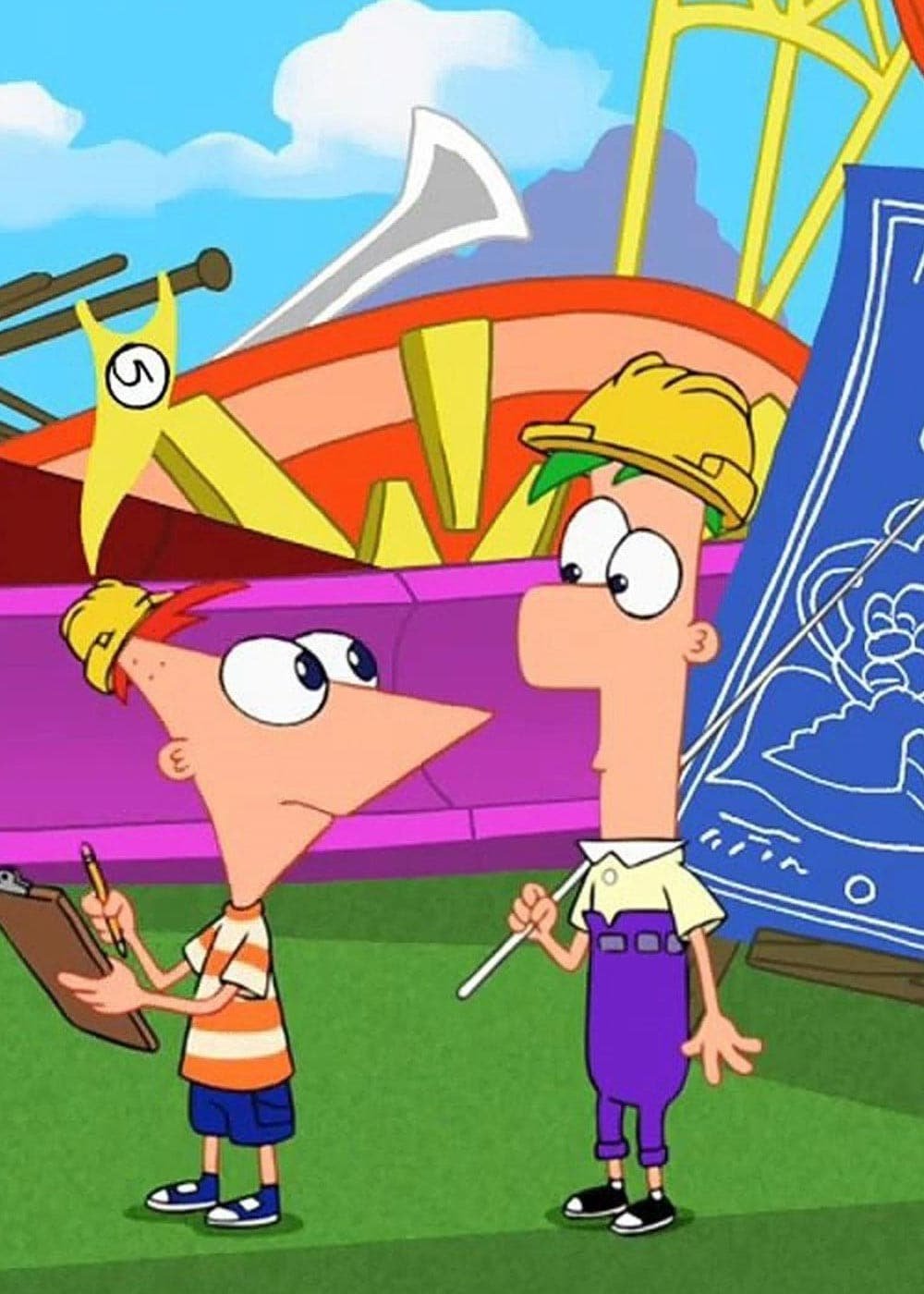
Ever wondered what truly goes on behind the elaborate inventions and catchy tunes of Danville? For fans diving deep into the animated world, unearthing the Behind the Scenes: Phineas and Ferb Season 3 Trivia & Production Secrets offers a whole new appreciation for the show’s enduring charm. This isn't just about fun facts; it's a peek into the creative engine that brought some of your favorite episodes to life, revealing surprising connections, clever choices, and the sheer dedication of its cast and crew.
From the specific decisions that shaped its musical numbers to the real-life inspirations behind its quirky characters, Season 3, like the seasons before and after, was a testament to the meticulous and often improvisational genius of its creators.
At a Glance: What Makes Phineas and Ferb Tick
- Separate Yet Synchronized: Most voice actors recorded their lines individually, a common practice that sometimes meant the main duo didn't meet for years.
- A Musical Mandate: Almost every episode after the pilot featured a song, a direct executive decision born from early success.
- Veteran Voice Power: The show boasted an impressive roster of voice talent, including stars from "The Rocky Horror Picture Show" and "Lexx."
- Beyond the Script: Much of Dr. Doofenshmirtz’s iconic rants were improvised by co-creator Dan Povenmire.
- Real-World Roots: From platypus chattering to step-family dynamics, the show often drew from actual science and personal experiences.
- Creative Constraints: Not all ideas made it to air; executives sometimes stepped in to guide storylines and character arcs.
- A Long-Lasting Legacy: The series became Disney's longest-running animated show by elapsed time, a testament to its consistent popularity.
The Minds Behind the Magic: From Rocko to Rollercoasters
Before they became the masterminds of Danville, creators Jeff "Swampy" Marsh and Dan Povenmire honed their craft on beloved animated series like "CatDog" and "Rocko's Modern Life." It's a fun tidbit that the name "Ferb" actually made early appearances in both of those shows as a minor character, a little Easter egg planted by the creators long before Phineas and Ferb were even a twinkle in their eye. This deep well of experience in episodic animation, combining humor with heartfelt moments, was foundational to the unique blend of adventure and family that defined Phineas and Ferb and especially shone through in its third season.
The duo's personal lives also profoundly shaped the show. Ferb, for instance, is based on two real individuals known by the creators, giving him a grounded yet enigmatic quality. The decision to make Phineas and Ferb step-brothers was a direct nod to Jeff "Swampy" Marsh's own reconstituted family, a conscious effort to represent blended families on screen. Even Marsh's time living in England and his Dutch wife inspired many of the subtle British and Dutch references sprinkled throughout the series, adding layers of charm and authenticity.
The Voices Behind the Whimsy: Casting & Collaboration Secrets
One of the most fascinating aspects of Phineas and Ferb's production, consistent across all seasons including Season 3, was its unique voice acting process.
Solo Sessions and Star Encounters
Typically, the voice cast recorded their lines separately. This meant that the leads, Vincent Martella (Phineas) and Thomas Brodie-Sangster (Ferb), didn't actually meet in person until two years into production. Brodie-Sangster, being British, recorded his parts from England, adding to the geographical separation. This kind of "remote" collaboration is standard in animation but always leaves fans surprised at how seamless the on-screen chemistry feels. There were exceptions, of course; Ashley Tisdale (Candace) and Caroline Rhea (Linda) occasionally recorded together, as did some other pairs, allowing for more natural interplay, particularly evident in episodes like "Rollercoaster." The upcoming revival, however, promises a shift, with the cast planning to record together, a treat for both the actors and the audience.
A Galaxy of Guest Stars and Iconic Voices
The show wasn't shy about bringing in big names. Fans with a keen ear might have noticed the voices of three cast members from "The Rocky Horror Picture Show": Richard O'Brien (Lawrence Fletcher), Barry Bostwick (Grandpa Clyde), and Tim Curry (Stubbings, Dr. Lloyd Wexler, Worthington Dubois). While their characters rarely interacted on-screen, their collective presence added a unique layer of cult classic cool. Similarly, Barry Bostwick, Tim Curry, and Malcolm McDowell—all known from the sci-fi series "Lexx"—also lent their distinct voices, further cementing the show's appeal to a wide audience. Malcolm McDowell’s turn as Grandpa Fletcher, in particular, offered a delightful example of an actor playing against their usual type.
The Power of Many Voices, One Actor
A hallmark of efficient and creative animation production is the use of versatile voice actors who can embody multiple characters. Phineas and Ferb excelled at this, a practice that continued vibrantly through Season 3:
- Dee Bradley Baker: The prolific voice actor was Perry the Platypus, Pinky the Chihuahua, Dr. Diminutive, and numerous other background characters.
- Caroline Rhea: Beyond her role as the perpetually oblivious Linda, she also voiced Linda’s mother, Betty Jo.
- Alyson Stoner: As Isabella, the leader of the Fireside Girls, she also voiced Jenny, adding another layer to her impressive range.
- Maulik Pancholy: The voice of Baljeet, he also lent his voice to Baljeet's Uncle Maulik (a character humorously named after him).
- Jeff "Swampy" Marsh: One of the show's creators, he was Major Monogram, Gordon Gutsofanemu, and Dink Winkerson.
- Diedrich Bader: Known for a variety of roles, he voiced six different characters, most notably Irving's brother Albert.
- Dan Povenmire: The other co-creator, not only voiced Dr. Doofenshmirtz but also an allergic Candace in "Jerk De Soleil," showcasing his comedic versatility.
Even other writers on the show often stepped into the recording booth to voice various minor characters, illustrating a collaborative and hands-on production environment.
Authenticity and Evolution in Casting
The casting choices often reflected a thoughtful commitment to character. Thomas Brodie-Sangster, Ferb’s original voice actor, is indeed British, mirroring Ferb's family background. Similarly, Maulik Pancholy, Baljeet's voice actor, is of Indian descent, aligning with his character's heritage. This attention to detail, while not always a strict rule, often added an extra layer of authenticity.
It's also worth noting the "Dawson Casting" prevalent in the show, where adult actors voiced the child characters. Bobby Gaylor, the voice of Buford, was around 40 when the series began, while Vincent Martella (Phineas) was 14 and Alyson Stoner (Isabella) was 13. Thomas Brodie-Sangster (Ferb) was 17. By the original run's end, Vincent was 23 and Thomas 25, leading to subtle changes like Phineas's voice deepening over time, a natural evolution that fans might have noticed if they watched the series from start to finish.
Interestingly, not everyone landed their initial audition role. Mitchel Musso, who famously voiced Jeremy, originally auditioned for Ferb. In the Latin Spanish dub, Rodrigo Gutiérrez auditioned for Phineas but was cast as Buford instead, proving that sometimes the perfect fit is found in an unexpected place.
The show also became a platform for its voice actors' musical talents. Olivia Olson (Vanessa) frequently performed songs, often singing for other characters too. Vincent Martella (Phineas) and Ashley Tisdale (Candace) had numerous musical numbers. Alyson Stoner (Isabella), initially a background vocalist, eventually received prominent singing roles, showcasing her evolving musicality. Tyler Mann (Carl) and Ariel Winter (Gretchen) also displayed their singing voices, highlighting the breadth of talent within the cast.
Real-Life Connections and Modern Reflections
The "Phineas and Ferb" family extended to real-life relatives working on the show. Michaela Zee, who voiced Ginger, is the daughter of Ming-Na Wen (who voiced Dr. Hirano). Aaron Daniel Jacob, a singer for the show, is the son of composer Danny Jacob, embedding a familial touch into the production.
More recently, the show’s legacy has evolved with its actors. Alyson Stoner, the voice of Isabella, came out as non-binary, making her work in "Candace Against the Universe" and subsequent projects an example of "Cross-Dressing Voices" from a new perspective. Maulik Pancholy, Baljeet’s voice, also came out as gay, creating an amusing "Irony as She Is Cast" example given Baljeet's numerous on-screen female love interests. These aspects weren't explicit production secrets during Season 3 but add depth to the show's history and its diverse cast's journey.
Crafting the Chaos: Storytelling & Creative Choices
The consistent quality of Phineas and Ferb, especially through its third season, wasn't accidental. It was built on deliberate creative choices, executive guidance, and a healthy dose of improvisation.
The Song That Changed Everything
One of the most defining characteristics of the series, particularly from Season 3 onwards, was the inclusion of at least one musical number in nearly every episode. This wasn't always the plan. The runaway success of the song "Gitchee Gitchee Goo" from the episode "Flop Starz" prompted an executive decision: every subsequent episode would feature a song. This mandate creatively challenged the team and resulted in the show's vast and beloved musical catalog. Only four episodes notably did not feature songs: "Rollercoaster," "Lights, Candace, Action!," "The Lizard Whisperer," and "Mommy, Can You Hear Me?"—making them rare exceptions in a generally tuneful run.
The Cutting Room Floor: Unheard Melodies
Even with the musical mandate, not every song made it to air. For instance, "Identical Stranger Princess of Drusselstein" was a song cut from the Christmas Episode. Similarly, "You're Wrong" and "This Is Our Inspirational Song" were cut from the ambitious "Summer Belongs to You!" special. These glimpses into discarded material show the iterative process of honing each episode to perfection, often prioritizing pacing and story over additional musical numbers.
Executive Decisions and Creative Resistance
While executive influence often shaped the show positively, like the decision for more songs and the addition of popular characters Isabella and Baljeet, there were times when creators Dan Povenmire and Jeff Marsh held their ground. A notable instance was the rejection of an executive suggestion for Perry to get a girlfriend. The creators felt it would dilute his unique role and relationship with Doofenshmirtz. Disney also vetoed a tattoo storyline for Dr. Doofenshmirtz in "Act Your Age," indicating a balance between creative freedom and brand guidelines.
Dan Povenmire himself considered "Boyfriend from 27,000 BC" his least favorite episode, expressing regret for some stereotypical Baljeet writing. This self-awareness speaks to the continuous effort to refine the show's storytelling, with Povenmire vowing to improve in the revival.
The Genius of Improvisation: Doofenshmirtz's Rants
Perhaps one of the most delightful "production secrets" is that much of Dr. Doofenshmirtz's hilarious dialogue, especially his lengthy rants, was improvised by Dan Povenmire himself. This spontaneous creativity brought an unparalleled level of comedic brilliance and personal touch to the character, making Doofenshmirtz one of animation's most memorable "harmless villains." Vanessa Doofenshmirtz, his non-evil child, serves as a clever parallel to Scott Evil from the "Austin Powers" series, further enhanced by her boyfriend Monty being voiced by Seth Green, Scott's actor.
Science, Platypi, and Pop Culture Nods
Beyond the gags, Phineas and Ferb often grounded its fantastical inventions in surprising scientific accuracy and wove in clever pop culture references.
Unexpected Scientific Foundations
Take Dr. Doofenshmirtz's Magnetism Magnifier, for example. While exaggerated for comedic effect, its use of a funnel to direct magnetic fields actually reflects a real scientific concept. This blend of science and silliness was a trademark of the show. And speaking of accuracy, Perry the Platypus's distinctive chattering sound isn't just a funny quirk—it's an accurate portrayal of real platypi vocalizations. His teal-green coloration, however, was purely an aesthetic choice, designed to make him stand out visually.
The creators intentionally chose a platypus for Perry, an uncommon animal, to avert the "Pet Fad Starter" trope. Their logic was sound: if they made the pet a common animal, kids would want them. A platypus, being difficult to acquire and care for, would prevent this, saving many real-life animals from becoming ill-suited household pets.
Playful Jabs and Cultural Homages
The show wasn't above a little friendly rivalry. In "Summer Belongs to You!", there was a playful jab at "SpongeBob SquarePants," a nod to the competitive landscape of children's animation. The episode "The Chronicles of Meap" was notably dedicated to Don LaFontaine, who performed his final role in the episode's trailer spoof, a poignant tribute to the iconic voice actor known for his "In a world..." movie trailers.
Fan Insights & Canon Confessions
What started as fan theories sometimes became official canon, a testament to the creators' engagement with their audience and their long-term planning.
Confirmations from the Creators
For years, fans speculated about connections between characters. In Season 4, two popular fan theories were officially confirmed: Ginger is indeed Stacy's sister, and Jenny and Django are siblings. These revelations provided satisfying closures for eagle-eyed viewers who had pieced together clues over the seasons.
Dan Povenmire, through social media, has also confirmed several long-standing questions:
- Perry the Platypus is Asexual: A confirmation that adds a layer of depth and modern representation to the beloved animal agent.
- Doofenshmirtz Knows Perry's Real Name: Apparently, through an email exchange—a delightfully mundane explanation for a significant secret.
- Doofenshmirtz is Not Phineas's Real Father: Laying to rest a persistent fan theory, maintaining the integrity of the show's step-family dynamic.
- Jeremy's Feelings for Candace: Jeremy's voice actor confirmed his genuine affection for Candace early on, making their eventual relationship feel earned.
- Linda's Awareness: Caroline Rhea, Linda's voice actress, was aware of the boys' elaborate inventions all along, providing a behind-the-scenes justification for Linda's consistent obliviousness.
These "secrets" shared post-production offer a rare glimpse into the creators' internal logic and character backstories, deepening the overall lore of Phineas and Ferb. Doofenshmirtz's brief return to evil after "Milo Murphy's Law" was a temporary decision born from the realization he was "terrible at being good," before recommitting to goodness, showcasing a continuous character arc even after the original series run.
The Journey to Your Screen: Production & Broadcast Quirks
The path for Phineas and Ferb episodes to reach audiences was often convoluted, marked by channel shifts, international premieres, and even legal hiccups.
Channel Hopping and Global Premieres
The series experienced multiple channel shifts throughout its run. While new episodes frequently premiered first on Disney XD, they would then air on Disney Channel. The upcoming 2025 revival will be available on Disney+ alongside Disney Channel/XD, reflecting the changing landscape of media consumption.
During Season 2, the show experienced "Schedule Slip," with many episodes airing internationally months before their US premieres. This meant dedicated fans in other countries often saw new adventures first, leading to discussions and early spoilers across the global fanbase, a trend that continued for some episodes into Season 3 and beyond. Several episodes even debuted on DVD before their TV premieres, such as "One Good Scare Ought to Do It!" and "The Doof Side of the Moon," offering fans an early look.
Legal Limbo and Streaming Challenges
A peculiar incident involved "Ready for the Bettys" and associated episodes. Due to legal issues with a real-life band named "The Bettys," these episodes were rarely rerun from 2009-2015. Thankfully, the issues were resolved, and they began airing again in 2015 and became available on streaming services, ensuring their place in the show's complete canon. Similarly, "Ready for the Bettys" and "Musical Cliptastic Countdown Hosted by Kelly Osbourne" were notably absent from some streaming platforms for a time but eventually found their way to wider availability.
Longevity and Legacy
The series, conceived way back in 1993, was rejected by multiple networks before Disney Channel finally greenlit it in 2006 for a 2007 premiere. It ran for eight years (2007-2015), making it Disney's longest-running animated series by elapsed time, an impressive feat given its initial four-season run. The 2025 revival, marking the 10-year anniversary month of the original finale, further cements its enduring appeal. Disney XD even aired a marathon of all episodes leading up to the 2015 series finale, a true send-off for a beloved show.
Not all versions of the show were created equal globally. Season 4, for instance, did not receive an official Icelandic dub, and several DS games were not released in Japan, highlighting regional differences in distribution.
More Unsung Heroes & Hidden Details
Beyond the main cast and crew, many played vital roles in Phineas and Ferb's success.
From Fan to Professional
The impact of dedicated fans is sometimes immeasurable. Artist Ashley Simpson, known for her vibrant fan art of grown-up Phineas and Ferb characters, was promoted to character designer for the emotionally resonant episode "Act Your Age." Her talent was so clear that she later worked on other Povenmire/Marsh projects, demonstrating the power of artistic passion.
The Nuances of Voice Acting
While Ferb's distinct speaking voice was often provided by Thomas Brodie-Sangster (and later David Errigo Jr.), his singing voice was sometimes provided by different actors. However, both Brodie-Sangster and Errigo Jr. did their own singing in specific episodes, showing their range. The show, like many long-running series, experienced numerous voice actor changes across characters and various international dubs, a natural part of a production's lifespan.
The practice of giving "Additional Voices" credit covers many non-main characters, acknowledging the essential contributions of a flexible ensemble cast who fill out the world of Danville.
Age-Old Questions and Gender Dynamics
The creators intentionally kept Phineas and Ferb's ages vague, only stating "less than fifteen." However, the "Act Your Age" episode implies they are somewhere between 8-12 years old during the main series, offering a rare hint without a definitive number.
Despite airing on the primarily female-oriented Disney Channel, Phineas and Ferb was largely considered gender-neutral in its appeal, attracting both boys and girls. However, this balance also presented challenges. Merchandise often excluded female characters, and executives resisted a "Fireside Girls" spin-off, fearing it would diminish the franchise's broad, gender-neutral appeal. This illustrates the delicate tightrope creators often walk between creative vision and market considerations.
Beyond the Blueprint: What the Creators Learned
The extensive production of Phineas and Ferb wasn't just about making episodes; it was a continuous learning process for its creators.
Reflecting on Regrets and Improvements
Dan Povenmire's candid admission about "Boyfriend from 27,000 BC" being his least favorite episode and his regret over stereotypical Baljeet writing highlights a commitment to growth and sensitivity, promising a more nuanced portrayal in the revival. This kind of self-reflection is rare and speaks volumes about the creators' dedication to their craft and characters.
Jeff "Swampy" Marsh stepped up as the voice director for Season 4, demonstrating a deeper involvement in shaping the performances in the later stages of the original run. This kind of internal growth and shifting responsibilities are common in long-running productions, as key personnel take on new challenges.
The Long Road to Revival
The original pilot for the series, which reportedly leaked online on June 23, 2025 (likely a typo for an earlier date, given the show's 2007 premiere), showcases the long incubation period the idea underwent. The fact that a movie announced in 2011 was initially delayed but eventually produced for Disney+ (as Candace Against the Universe) further emphasizes the show's enduring appeal and the creators' persistence. The upcoming revival, animated by Snipple Animation, is set to refresh the visual and narrative style for a new era.
A small, but significant, detail: during the original run, only the theme song credited its songwriters. This was a notable oversight that will be corrected in Season 5, ensuring proper recognition for all musical contributions. And, unfortunately, Mitchel Musso, the original voice of Jeremy, was replaced in the revival due to his 2023 arrest, a reminder of the real-world complexities that can impact production.
What These Secrets Mean for Fans Today
Delving into the production secrets and trivia of Phineas and Ferb, especially understanding the context of Phineas and Ferb Season 3, doesn't just satisfy curiosity; it enriches your viewing experience. Knowing the personal inspirations behind characters, the improvisational genius of voice actors, or the careful executive decisions behind a musical number allows you to see each episode with fresh eyes. It's a reminder that behind every laugh and every impossible invention is a dedicated team, countless creative choices, and a true passion for storytelling. So next time you're re-watching an episode, listen for the subtle nuances, appreciate the intricate layers of its creation, and remember the magic that went into making it all happen.